
DUTCH CUISINE EXPLORATION: MUST-TRY FOODS AND LOCAL DELICACIES
As a temporary worker in the Netherlands, the cultural experience wouldn’t be complete without indulging in the rich and diverse world of Dutch cuisine. From hearty classics to delectable sweets, Dutch food reflects the country’s history, traditions, and vibrant culinary scene. In this gastronomic journey, we’ll explore must-try foods and local delicacies that will undoubtedly leave your taste buds longing for more.
STROOPWAFELS & SPECULAAS
Let’s kick off our culinary adventure with the irresistible stroopwafel. This thin waffle cookie, filled with a luscious caramel syrup, is a popular treat in the Netherlands. Best enjoyed fresh from a local market or bakery, these sweet delights pair perfectly with a cup of coffee, providing a delightful blend of textures and flavors.
Immerse yourself in the delightful world of Dutch cookies with Speculaas. These spiced, thin and crunchy cookies are traditionally enjoyed during the winter months. The aromatic blend of cinnamon, nutmeg, and cloves makes Speculaas a perfect accompaniment to a cup of coffee or tea, offering a taste of Dutch warmth and coziness.


BITTERBALLEN & KROKETTEN
Bitterballen, a beloved Dutch snack, is a deep-fried ball filled with a savory mixture of ragout. Often served with mustard, these crispy bites are a staple at Dutch borrels (social gatherings). Whether enjoyed at a local pub or during a work celebration, bitterballen are a must-try for anyone looking to embrace Dutch snacking culture.
Another Dutch snack that demands attention is the kroket. These deep-fried croquettes feature a crunchy breadcrumb exterior that gives way to a velvety, savory filling. Whether enjoyed on its own or nestled in a soft bread roll, the kroket is a savory sensation that captures the essence of Dutch comfort food.
HARRING & PATATJE OORLOG
Brace yourself for a unique Dutch culinary experience with haring. This raw herring fish, typically served with onions and pickles, is a traditional street food delight. For the brave-hearted, trying haring the Dutch way, by taking a bite from the tail end while holding it high, is a cultural experience you won’t soon forget.
Indulge in the Dutch take on the classic french fry with Patatje Oorlog. These thick-cut fries are generously topped with a flavorful combination of peanut sauce, mayonnaise, and chopped onions. It’s a tantalizing blend of savory and creamy, offering a delightful twist to the traditional fries experience.


PANNENKOEKEN & POFFERTJES
Prepare your taste buds for a pancake experience like no other with Pannenkoeken. These large, thin pancakes can be sweet or savory, offering a versatile canvas for toppings like powdered sugar, syrup, cheese, bacon, or fruit. Whether for breakfast, lunch, or dinner, Pannenkoeken are a Dutch culinary delight worth savoring.
Poffertjes are small, fluffy pancakes that captivate the hearts of both locals and visitors alike. Served with a dusting of powdered sugar and a dollop of butter, these miniature delights are often found at street markets and fairs. Poffertjes are a delightful snack or dessert, perfect for satisfying your sweet cravings.
ADVOCAAT & JENEVER
Take a sip of Advocaat, a traditional Dutch liqueur with a custard-like consistency. Made from eggs, sugar, and brandy, this velvety drink is often enjoyed on its own or as a topping for desserts. Embrace the smooth, sweet richness of Advocaat as a delightful exploration of Dutch flavors.
Conclude your culinary journey with a sip of Jenever, a traditional Dutch gin with a long history. This juniper-flavored spirit comes in various styles, from young and light to aged and complex. Explore the world of Dutch spirits by savoring Jenever on its own or in classic cocktails, appreciating the rich heritage of this quintessentially Dutch drink.


CONCLUSION
Dutch cuisine is a delightful journey through flavors, textures, and cultural traditions. From sweet treats like stroopwafels to savory bites like bitterballen, each dish tells a story of the Netherlands’ culinary heritage. As a temporary worker, don’t miss the chance to immerse yourself in the local food scene, as it’s a delicious gateway to understanding and appreciating Dutch culture. So, put on your gastronomic hat and savor the culinary delights that the Netherlands has to offer. Eet smakelijk! (Enjoy your meal!)
Looking for a job in the Netherlands? Have a look at our available jobs and apply below.
LEGAL CHANGES FOR TEMPORARY WORKERS IN THE NETHERLANDS IN 2024
In 2024, the Netherlands introduced significant changes that have a big impact on individuals engaged in short-term employment, particularly targeting temporary workers (‘uitzendkrachten’ in Dutch). These changes aim to establish a fairer and more supportive work environment for those in temporary roles. There have also been some changes that affect everyone, not only the temporary workers. Let’s take an in-depth look at each of these changes and understand how they affect temporary workers across the country.
TAX UPDATES
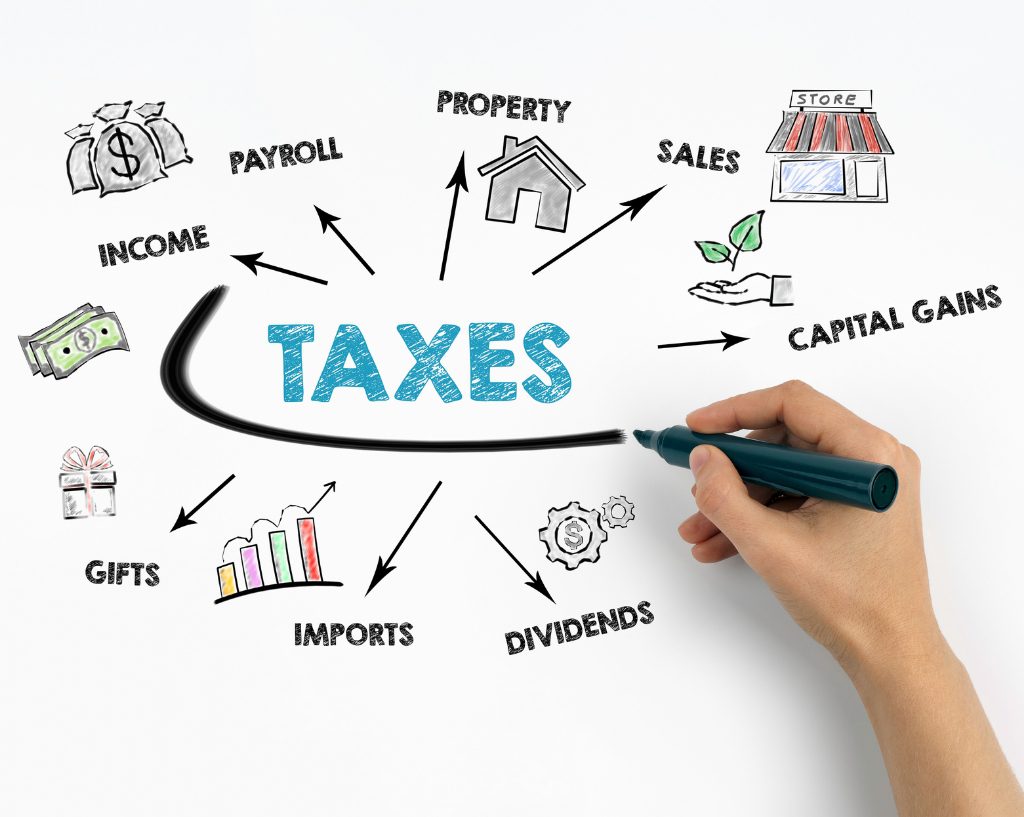
In 2024, the Dutch government is once again changing how they tax different types of income, like what you get from your job or your savings.
For the money you make from your job (Box 1), they’re adjusting the taxes like this:
- If you earn up to €75,518 per year, they’ll tax it at a rate of 36.97%.
- But if you earn more than €75,518 per year, they’ll tax the extra part at a higher rate, which is 49.5%.
The government decided not to increase the top tax bracket as much as the cost of living goes up, so more people with higher incomes will end up in that top tax group, bringing in more money for the government. Also, in 2024, the amount you need to earn before you start paying national insurance will go up to €38,098, up from €37,149 in 2023.

HOURLY MINIMUM WAGE
From January 1, 2024, things are changing for how much people get paid in the Netherlands. Instead of getting a monthly, weekly, or daily wage, the Netherlands is switching to paying a minimum amount for every hour you work.
So, if you have a job, your employer has to pay you at least €13.27 for every hour you work. This is to make things fairer. Before, if someone worked 36 hours a week, they got the same pay (€1,995) as someone who worked 40 hours. Now, it’s about making sure everyone gets a fair deal.
HIGHER TRAVEL ALLOWANCE
From January 1, 2024, things are changing for how much you can save on taxes while traveling in the Netherlands. The most you can get without paying taxes is going up from €0.21 to €0.23 for every kilometer you travel. This means you can save more on taxes because you can deduct a bigger part of your travel expenses. However, it does not mean that the employer needs to pay the €0.23 per km. It can still be €0.21 per km or even less.
Employers can choose to give more than €0.23 cents for each kilometer, but if they do, that extra amount is seen as an added bonus in the employee’s overall salary package. It’s like getting a little extra benefit.
INSURANCE COSTS
From January 1, 2024, things are changing for how much you can save on taxes while traveling in the Netherlands. The most you can get without paying taxes is going up from €0.21 to €0.23 for every kilometer you travel. This means you can save more on taxes because you can deduct a bigger part of your travel expenses. However, it does not mean that the employer needs to pay the €0.23 per km. It can still be €0.21 per km or even less.
Employers can choose to give more than €0.23 cents for each kilometer, but if they do, that extra amount is seen as an added bonus in the employee’s overall salary package. It’s like getting a little extra benefit.
In the next year, health insurance in the Netherlands will cost a bit more. The big companies, the ones many people use, are raising their basic policy prices by around €8 per month. But here’s the thing, the ‘eigen risico’ deductible – the amount you pay before insurance kicks in – will stay the same at €385. If you are ensured through Eastmen you do not need to pay the ‘eigen risico’.
This might make a difference for how much money people have for other things. It’s a good idea for individuals to think about their health insurance and money plans because of this change.
STATE PENSION AGE
Starting in 2024, there are some changes in the Netherlands about when people can retire. The age when you get your retirement money, called the pension age, is going up from 66 years and 10 months to 67. And guess what? It’s staying at 67 until 2027. Then, in 2028, it’s moving up a bit more to 67 years and three months.
So, if you were born after January 1, 1958, in 2024, you’ll need to wait until your 67th birthday to get your pension. It’s like they’re adjusting the rules a bit. This change is about being fair and keeping up with the current times. It means we might need to think about our plans for when we stop working and how we handle our money. Just something to remember as things change a bit.


CHILDCARE ALLOWANCE
The Dutch government is planning to give more help to working parents who have kids in registered childcare places in the Netherlands. First, they said they would increase the most they would pay for each hour of childcare to €9.65 for daycare, €8.30 for out-of-school care, and €7.24 for childminder care.
Then, they had another idea to give even more help, making it €10.25, €9.12, and €7.53 per hour. The Senate, a part of the government, said yes to this plan. They want to make sure the help matches what things really cost. Parents got the first rates by the end of December, but the extra help will start once the Senate gives it the thumbs up.
Here’s the thing: If your childcare costs more than what the government pays, you’ll need to pay the extra. But if it’s less, the government will only cover the hourly rate you are charged.
CONSUMER CHANGES
In 2024, there are some changes for that affect everyone in the Netherlands:
The 2023 energy price cap benefiting consumers will end on January 1, leading to an estimated increase of around €13 per month in electricity and gas bills.
A “lemonade tax” will raise the cost of non-alcoholic drinks like soft drinks, fruit juices and oat milk, with oat milk increasing by €0.17 per litre. The tax on mineral water will be removed to encourage water consumption.
Higher duties on alcohol and cigarettes will apply, with a case of beer becoming around €0.27 more expensive, a bottle of wine costing around €0.07 more and a pack of cigarettes increasing to about €11.10 from April 2024, along with a 50-gram packet of tobacco at around €24.62.
From January 1, 2024, shops can only sell tobacco-flavored e-cigarettes, aiming to discourage vapes with sweet or fruity flavors, especially among children and young people.
- Flight tax will jump to €28.58 in 2024 from €26.43 in 2023, making airfares four times more expensive than in 2022.

CONCLUSION
In 2024, big changes are happening in the Netherlands, touching different aspects that impact both regular people and businesses. From how much people get paid to how travel expenses are handled, and even adjustments in health insurance and taxes on certain items, it’s a lot to take in.
The government is really focusing on keeping people healthy, as seen in things like the “lemonade tax” and saying no to flavored vapes. These changes mean everyone, from individuals to businesses, will need to pay attention and adjust to the new ways things work in the coming year.
Looking for a job in the Netherlands? Have a look at our available jobs and apply below.
TOP 5 CHRISTMAS MARKETS IN THE NETHERLANDS
In the heart of winter, when the air is filled with the aroma of hot wine and the merry sounds of laughter, Christmas markets in the Netherlands come alive in a burst of colors and festive cheer. These markets are not just about shopping; they’re an experience—a celebration of the season’s spirit, offering an array of delights for visitors of all ages. Here’s a roundup of the top 5 Christmas markets in the Netherlands that promise to enchant and captivate.
1. AMSTERDAM’S WINTER PARADISE AT MUSEUMPLEIN
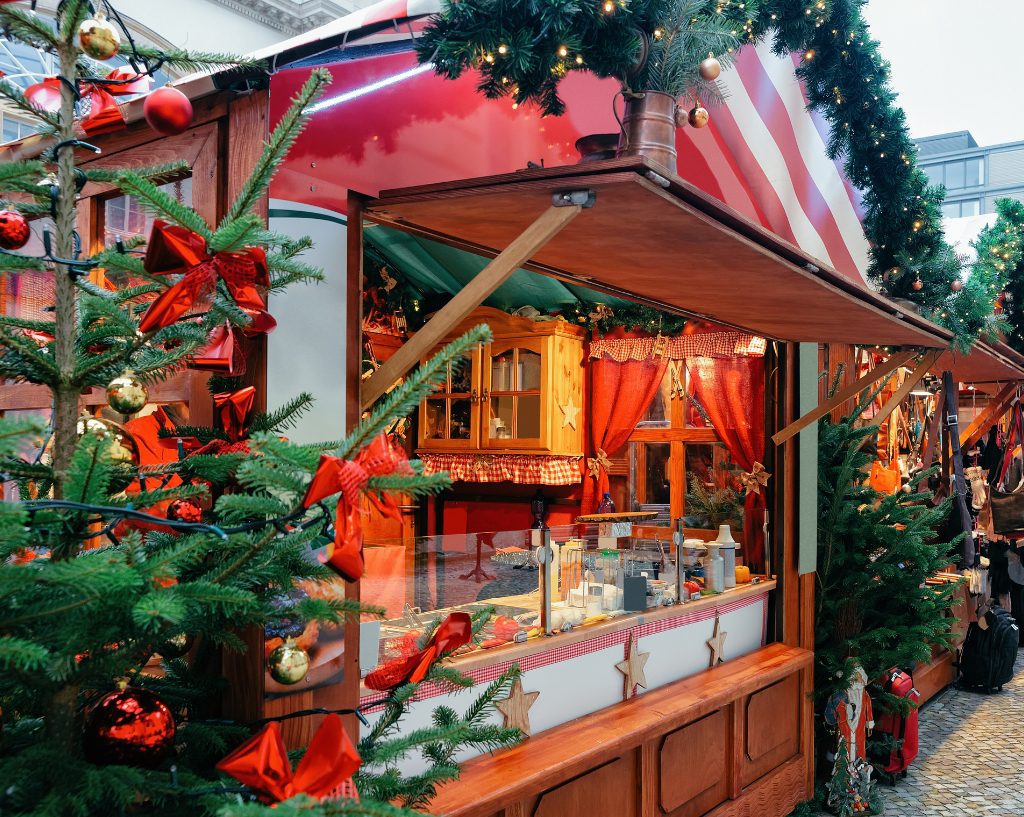
Amsterdam, the enchanting capital of the Netherlands, transforms into a winter wonderland during the festive season. Museumplein, situated in the middle of cultural institutions, hosts a large Christmas market. Embrace the holiday vibes as you browse through traditional Dutch treats, handicrafts, and unique gifts. Ice-skating rinks, captivating performances, and a charming Ferris wheel ensure an unforgettable experience for families and couples alike.
2. MAASTRICHT’S MAGICAL CHRISTMAS MARKET
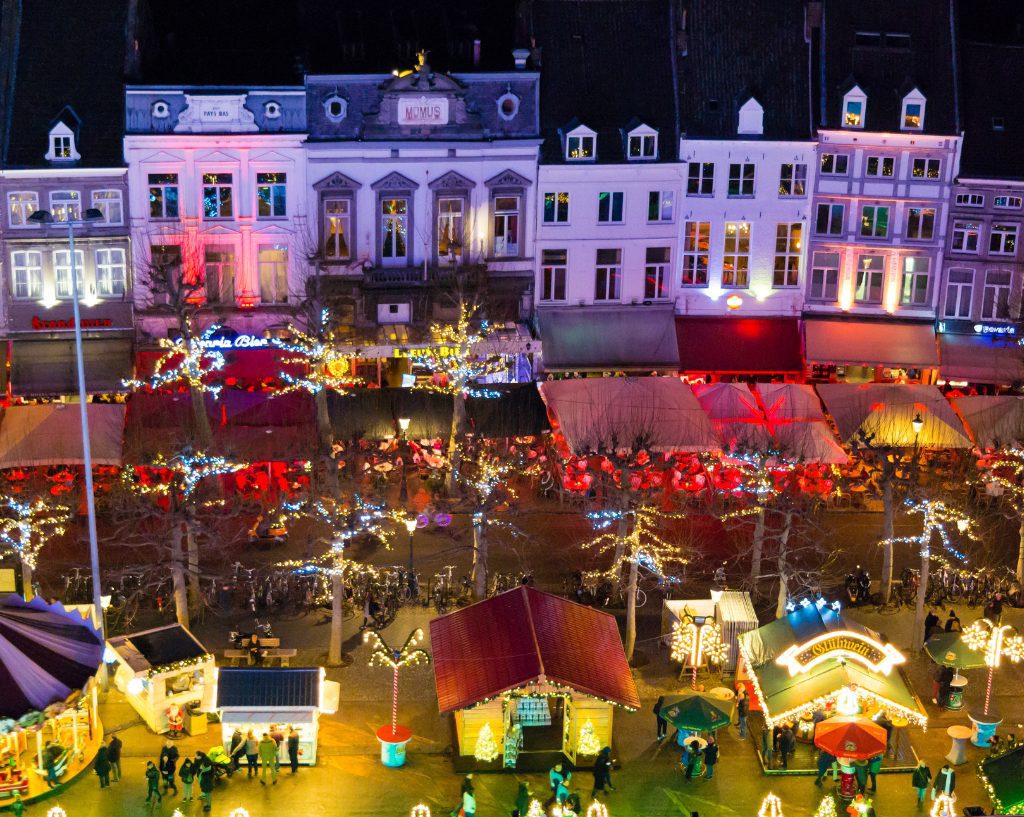
Maastricht, known for its old-world charm, showcases a Christmas market that transports visitors back in time. The Vrijthof Square, adorned with twinkling lights and festive decorations, hosts a market offering artisanal crafts, local delicacies, and a delightful ice rink. The city’s medieval backdrop adds an ethereal touch, making it a picturesque setting for joyful celebrations.
3. THE ENCHANTING DICKENS FESTIVAL IN DEVENTER
Deventer turns into a page from Charles Dickens’ tales during its annual Dickens Festival. This extraordinary event is more than just a market; it’s a living reenactment of 19th-century England. The streets are bustling with characters from Dickens’ novels, complemented by stalls offering period-themed goods and delectable treats. The ambiance is truly transportive, making visitors feel like they’ve stepped into a bygone era.


4. ROTTERDAM’S WINTER FAIR AT AHOY
Rotterdam’s Ahoy transforms into a captivating Winter Fair during the festive season. This indoor market boasts an array of activities, including an ice-skating rink, a Ferris wheel, and a diverse range of stalls offering unique gifts and culinary delights. The market’s indoor setting ensures visitors can revel in the festive spirit regardless of the weather outside.
5. HAARLEM’S TRADITIONAL CHRISTMAS MARKET
Nestled in the picturesque city of Haarlem lies a traditional Christmas market exuding warmth and coziness. Grote Markt, the central square, transforms into a festive paradise featuring an assortment of stalls offering handmade crafts, delightful snacks, and warm beverages. Carol singers and live performances add to the festive atmosphere, inviting visitors to soak in the holiday spirit.


CONCLUSION
The Christmas markets in the Netherlands aren’t just about shopping; they’re about indulging in the festive spirit, immersing oneself in tradition, and creating lasting memories. Each market offers a unique experience, blending local culture with the enchantment of the holiday season. So, whether you’re drawn to historical settings, bustling cityscapes, or intimate gatherings, these markets promise a magical journey through the joyous essence of Christmas. Pack your warmest scarf, gather your loved ones, and set off to explore these enchanting Dutch Christmas markets—it’s an experience you won’t soon forget!
Looking for a job in the Netherlands? Have a look at our available jobs and apply below.
THE NETHERLANDS: ATTRACTING, DEVELOPING AND RETAINING TALENT
Are you considering working abroad and wondering where to go? The Netherlands might just be the perfect destination for you. It stands shoulder to shoulder with global talent magnets like Switzerland, Singapore, and the United States. As highlighted in the Global Talent Competitiveness Index (GTCI), the Netherlands secures its spot among the top 10 countries for talent competitiveness, paving the way for a promising professional landscape. Wondering why you should choose to work in the Netherlands? Keep reading!
WHAT MAKES THE NETHERLANDS STAND OUT?
Imagine a place where your skills are not just welcomed but celebrated. That’s exactly what the Netherlands offers. The GTCI doesn’t just approve of it; it cheers for the way it draws in and supports talent, almost as if it’s saying, “Hey, your skills are a perfect fit here!”
The Netherlands is among the top 10 talent-competitive countries. That means it’s really good at attracting, growing, and keeping talented individuals. If you choose to work there, you’ll be in an environment that values and supports your skills and growth. Companies in the Netherlands are known for their efforts to create opportunities for talented individuals to thrive, which is crucial for a fulfilling career.
Being in the Netherlands isn’t just about location; it’s about being at the core of Europe’s lively talent hub. Within Europe, the Netherlands shines among the top countries for talent competitiveness. Being part of a group of 17 European countries in the top 25 indicates that it’s not just a good place to work but also a part of a larger ecosystem that fosters talent. This means that it could open doors to various opportunities across borders.
The Netherlands’ commitment to improving talent competitiveness has made it an attractive hub for skilled individuals. It means the country doesn’t settle for just being good; it aspires to be even better. This dedication to growth creates an environment where new ideas are welcomed and innovation is encouraged, making it an exciting place to work.
WHY SAY 'YES' TO THE NETHERLANDS?
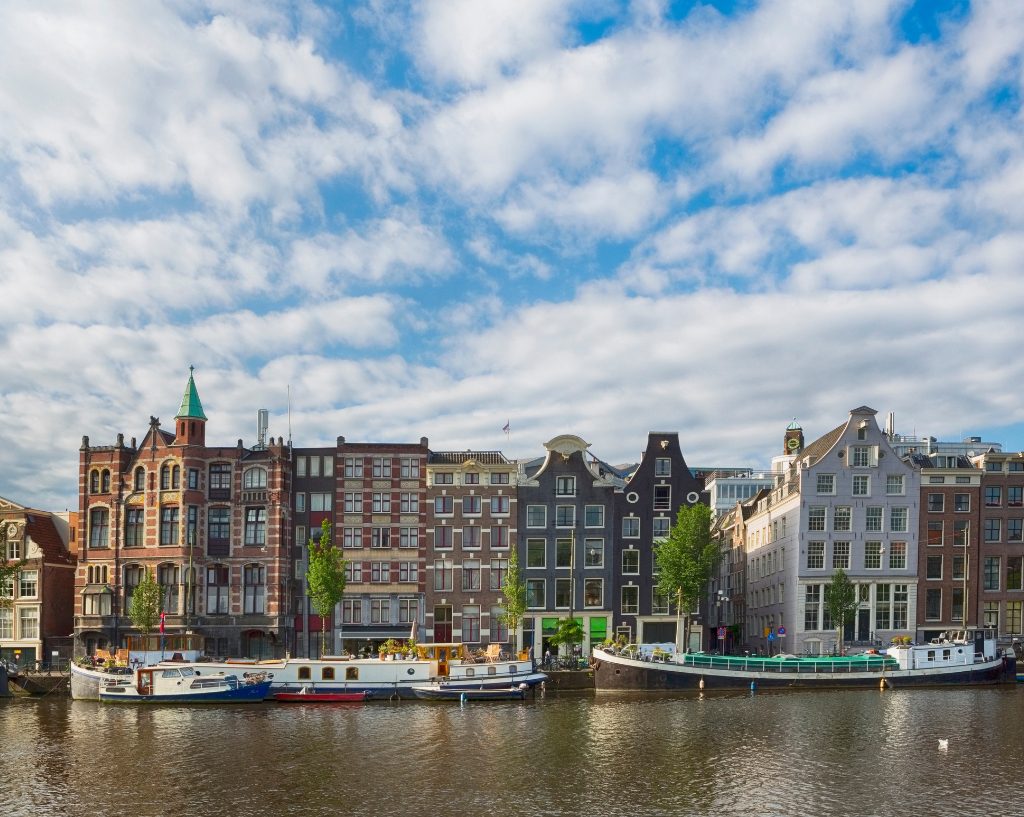
Life balance: it’s not just about your career; it’s about your whole life. The Netherlands brings excellent healthcare, world-class education, a society that embraces you and a high quality of life.
Future-focused: the job market is evolving, and the Netherlands is gearing up for it. As technology and sustainability become key players in the workforce, being in a country that’s prepared for these changes is advantageous. It means your skills will remain relevant and in demand, ensuring a more stable and fulfilling career path.
Openness: the welcoming nature of the Netherlands towards foreign workers is invaluable. When moving to a new country, feeling accepted and integrated into the community matters a lot. The Netherlands’ openness to diverse talent makes the transition smoother and encourages a diverse and inclusive work culture.
HOW THE NETHERLANDS CAN SUPERCHARGE YOUR CARRER
Career & skills development: imagine more opportunities to learn and grow. The Netherlands will keep on investing even more in education and skill development to create unstoppable professionals. Roles in technology, sustainability, AI, and renewable energy will be in demand.
Attraction strategies: companies in the Netherlands understand the importance of offering competitive wages, skill development programs, and clear career advancement paths. These strategies will play an important role in attracting and retaining talent in the coming years as the job market evolves.
By highlighting these aspects, individuals considering working abroad can see how the Netherlands not only offers current opportunities but also lays the groundwork for a sustainable and prosperous career in the future. Welcoming diverse talent isn’t just nice; it’s a game-changer. The more diverse the workforce, the more innovative and creative the ideas become.
Skills development: companies are gearing up to develop their workforce. There will be more focus on training and upskilling to meet the demands of the changing job market.
CONCLUSION
The Netherlands doesn’t just promise a job; it offers an enriching career journey. Here, you can achieve more than just working – you can grow as a professional too. The Dutch companies really care about helping you do your best. Your ideas and talents get a chance to shine.
By focusing on growth, openness, and nurturing talent, the Netherlands stands as an irresistible beacon for those seeking not just a job but an exceptional professional expedition.
Think of the Netherlands as more than just a stop; it’s a start for your career dreams. Get ready for a journey full of chances, learning, and a path that leads you to success. Join the league of individuals thriving in a landscape that celebrates talent, innovation, and success.
Looking for a job in the Netherlands? Have a look at our available jobs and apply below.
WORKING IN THE NETHERLANDS - WONDERWOODS PROJECT
Making the decision to leave your homeland and work and live in a foreign country is a thrilling yet challenging adventure. It’s a choice that brings with it a multitude of questions: Where will you work? What can you anticipate about life in a completely new place? In this blog, we’re here to guide you through this journey of discovery. We’ll introduce you to one of our outstanding projects, Wonderwoods, and offer you a glimpse into the experiences of our devoted workers who have already embarked on the bold move of relocating to the Netherlands.
MORE THAN JUST BUILDINGS
Wonderwoods isn’t just any construction project; it’s a game-changer for the city of Utrecht. Situated at the heart of Utrecht, on the corner of Jaarbeursboulevard and Croeselaan, Wonderwoods is a revolutionary development that aims to transform the city into a vibrant, green oasis.
The project’s name says it all: “Wonderwoods.” It’s about creating something truly wonderful in the heart of the Netherlands. Wonderwoods isn’t just about constructing buildings; it’s about creating a sustainable, eco-friendly community that brings together people from all walks of life.

MEET OUR PROJECT BOOSTERS
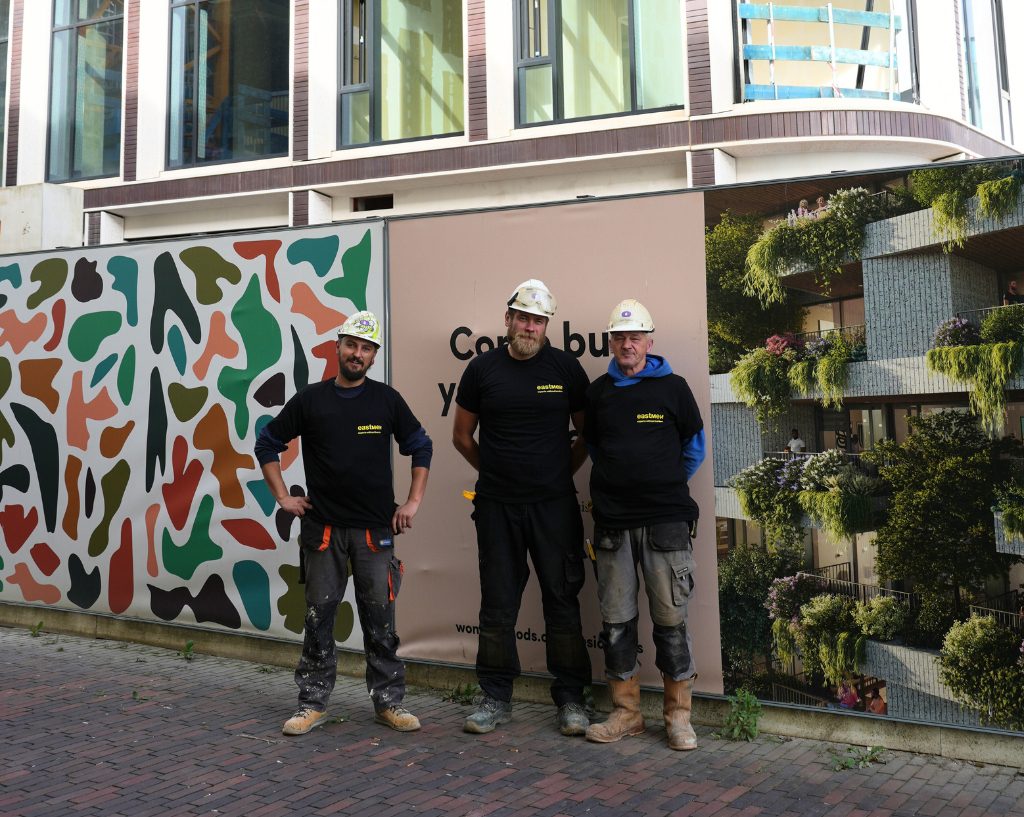
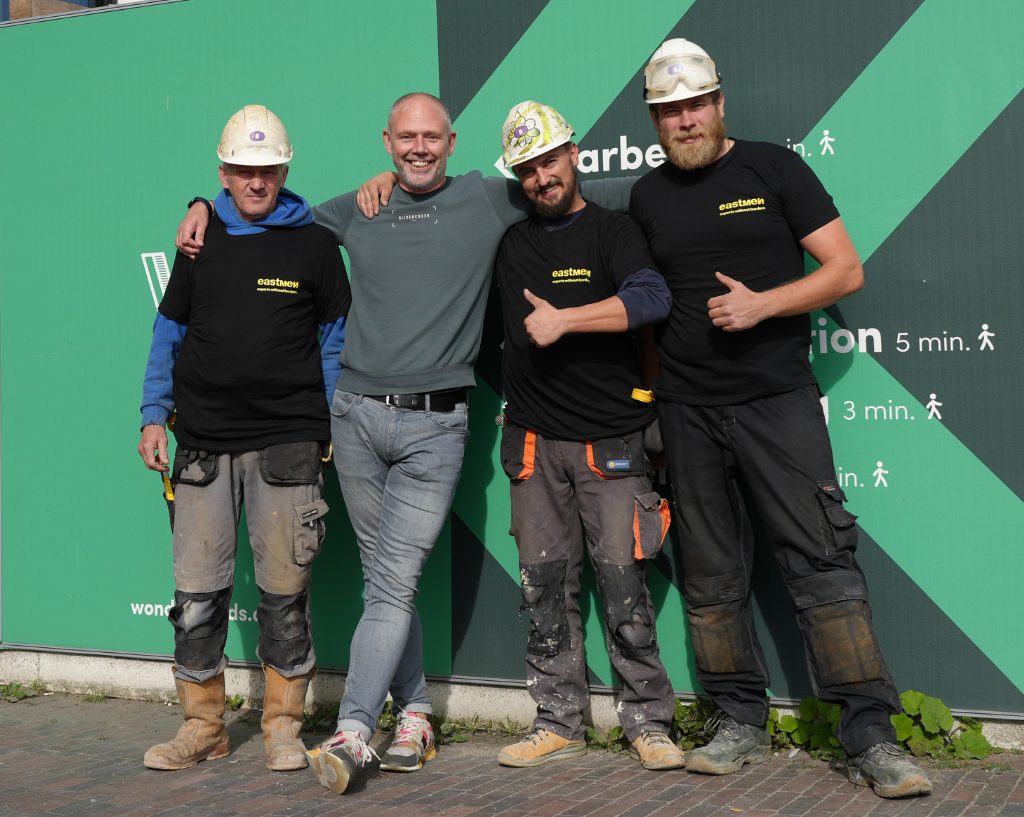
Now, let’s get acquainted with a group of incredible individuals who’ve embarked on a transformative adventure to join the Wonderwoods project. These dedicated workers have left their homeland to work and live in the Netherlands, where they’ve shared their unique skills and enthusiasm with this extraordinary project.
Their stories and backgrounds bring forth a unique blend of perspectives and experiences. Together, they showcase the power of unity and collaboration, demonstrating that no matter where you come from, working together can create something truly amazing.
WHAT CAN YOU EXPECT?
Wonderwoods isn’t your typical place of employment; it’s a vibrant community where individuals come not just to work, but to grow, learn, and forge connections with others who share an unwavering passion for sustainability and green living. What sets Wonderwoods apart is the sense of belonging, the camaraderie, and the shared commitment to making the world a greener and more sustainable place.
Our foreign workers have discovered something truly remarkable within the framework of this project—a welcoming and supportive environment that extends well beyond the construction site and permeates the entirety of the Netherlands. The warm embrace of their Dutch colleagues and the local community has made their transition into a new country remarkably smooth and heartwarming.

CONCLUSION
The Wonderwoods project stands as a testament to the global community’s potential to come together, bringing forth a brighter, more sustainable future. The dedication of these foreign workers has not only shaped Wonderwoods but has also left an indelible mark on Utrecht and the world at large.
Wonderwoods is more than just a construction project; it’s a beacon of change, a symbol of unity, and an inspiration for all of us to embrace new horizons and create a brighter, greener future together. Stay tuned for more updates and stories from Wonderwoods. The journey continues, and it’s an exciting one
Looking for a job in the Netherlands? Have a look at our available jobs and apply below.
CLA WAGE INCREASE IN THE NETHERLANDS IN 2023
CLA WAGE INCREASE IN THE NETHERLANDS IN 2023
In 2023, there was a remarkable wage increase in the Netherlands made possible by the Collective Labor Agreement (CLA). In this blog, we will talk about why this pay increase is a big deal and how does it change things for people who work here, whether they’re from the Netherlands or from another country. Let’s find out by taking a closer look at what this extra money means for the people who work in the metal and technical sectors and those who keep things moving in transportation. We’ll see how this pay boost has made a real difference in their lives and in the economy as a whole.
UNDERSTANDING THE COLLECTIVE AGREEMENT
Before we go into the specifics of the wage increase, let’s take a moment to understand what the Collective Labor Agreement (CLA) is. In the Netherlands, the CLA is a legally binding agreement negotiated between employers’ organizations and trade unions. It sets out the terms and conditions of employment for workers in various sectors, including wages, working hours, leave entitlements, and other benefits.
The CLA is an integral part of the Dutch labor market and it plays an important role in ensuring fair and competitive employment conditions. However, the CLA is not the same for everyone. It can vary between different sectors and industries, as well as between specific companies within those sectors. This means that different sectors and companies may have their own unique CLAs tailored to their specific needs and circumstances. So if you have a question about wages, working hours or other benefits, you need to check that CLA that applies to the company you work for.


WAGE INCREASE IN 2023
In 2023, the Netherlands experienced a notable wage increase across various sectors, with the metal and technical sectors and the transport industry being particularly impacted. The wage increase was implemented to address several key factors:
Inflation: In the preceding years, the Netherlands, like many other countries, had been struggling with inflationary pressures. The wage increase aimed to help workers keep up with rising living costs, ensuring their purchasing power remained intact.
Labor shortages: The metal and technical sectors, in particular, had been facing a shortage of skilled workers. Offering competitive wages was seen as a strategy to attract and retain talent in these industries.
METAL AND TECHNICAL SECTORS
In the metal and technical sectors, the wage increase in 2023 translated to an average annual salary increase of around 3.5% for workers covered by CLAs. For example, a skilled welder’s average annual salary in these sectors increased from €40,000 in 2022 to approximately €41,400 in 2023. This wage boost was well-received by Dutch workers as it improved their financial stability and helped in compensating the higher cost of living.
The wage increase in the metal and technical sectors had significant implications for foreign workers as well, who constitute a substantial portion of the workforce in these industries.
Many foreign workers come to the Netherlands seeking better job opportunities, and competitive wages make the country an attractive destination.
However, the wage increase also posed challenges for some foreign workers. Those who were already living in the Netherlands found themselves in a favorable position, as their incomes improved. However, new arrivals may have encountered higher wage expectations and increased competition for jobs in these sectors.
TRANSPORT SECTOR
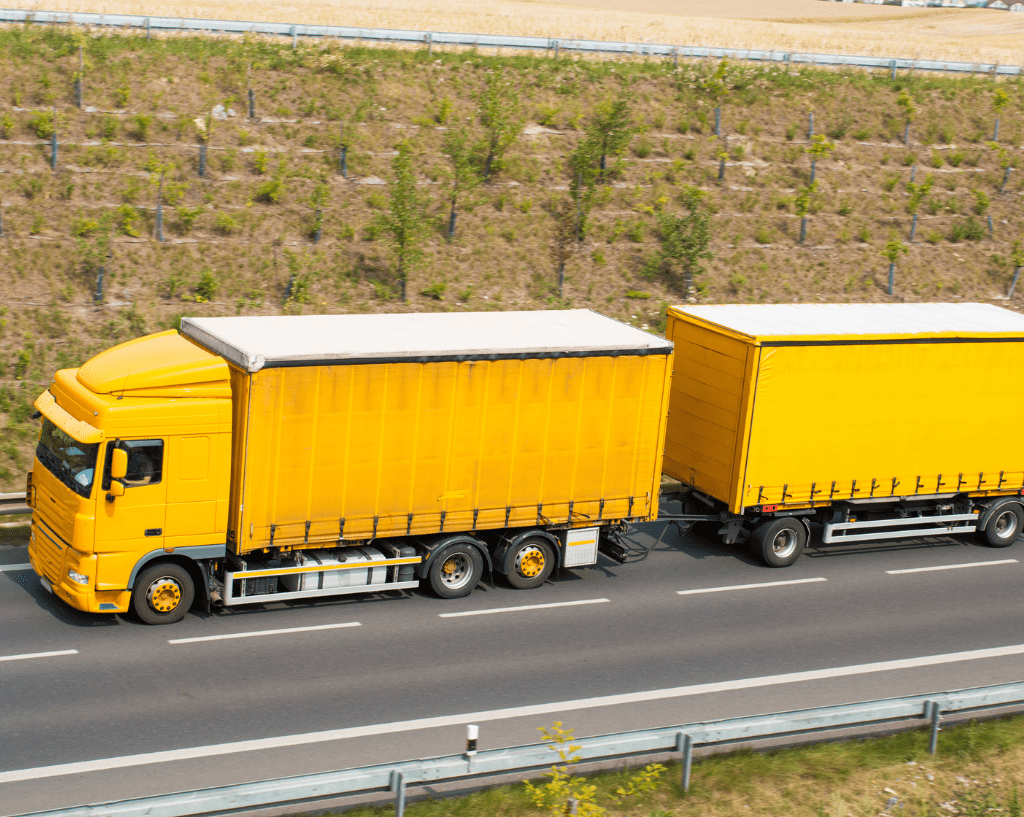
The transport sector, which includes logistics and trucking companies, also witnessed a significant wage increase in 2023. The average salary increase in this sector was around 3.2%, with truck drivers and logistics workers benefiting from the wage increase. For instance, a long-haul truck driver’s average annual salary rose from €38,000 in 2022 to approximately €39,200 in 2023.
Foreign workers in the transport sector were also affected by the wage increase. As the demand for transportation services remained strong, foreign workers continued to find employment opportunities in the Netherlands. The wage increase was seen as a positive development for these workers, providing them with competitive remuneration.

CONCLUSION
The wage increase in the Netherlands in 2023, governed by the Collective Labor Agreement (CLA), had significant implications for the metal and technical sectors and the transport industry. Dutch workers in these sectors experienced improvements in their income and living standards, helping them combat the challenges of inflation and labor shortages.
Foreign workers, while also benefiting, faced also some challenges as the competition for jobs has increased in the Netherlands. Overall, the wage increase underscored the importance of CLAs in maintaining fair employment conditions and competitiveness in the Dutch labor market.
With competitive wages and welcoming work environments in sectors like metal, technical and transport, it’s a great time to consider joining us. Check out our vacancy page and discover incredible opportunities waiting for you. Your next adventure starts here!
PUBLIC TRANSPORT IN THE NETHERLANDS & THE OV-CHIPKAART
The Netherlands is famous for having a really good and easy-to-use transportation system, which is great for people who are new to the country. This guide will show you how to use public transportation in the Netherlands and will explain what an OV-chipkaart is and how to use it.
WHAT IS AN OV-CHIPKAART?
WHAT IS AN OV-CHIPKAART?
OV-CHIPKAART?
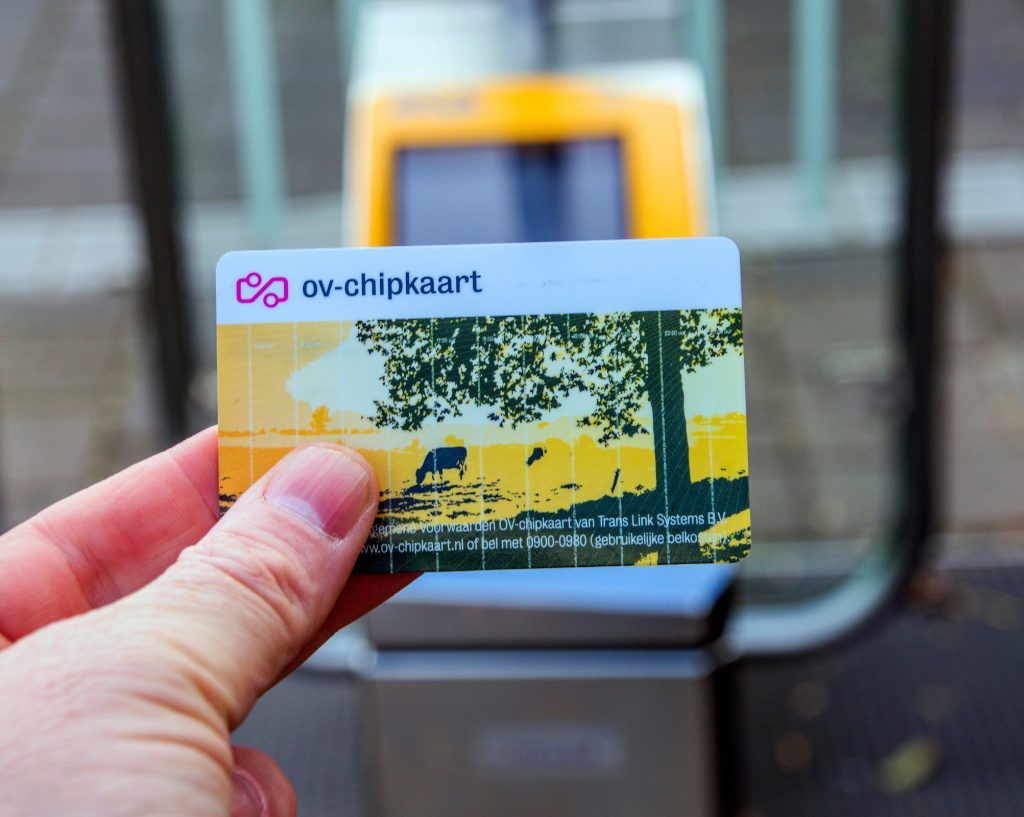
An OV-chipkaart is a contactless card used on various forms of public transportation in the Netherlands. It serves as a ticket that passengers can use to travel on trains, buses, trams, and metro services throughout the country. The term “OV” stands for “Openbaar Vervoer,” which translates to “Public transport” in English.
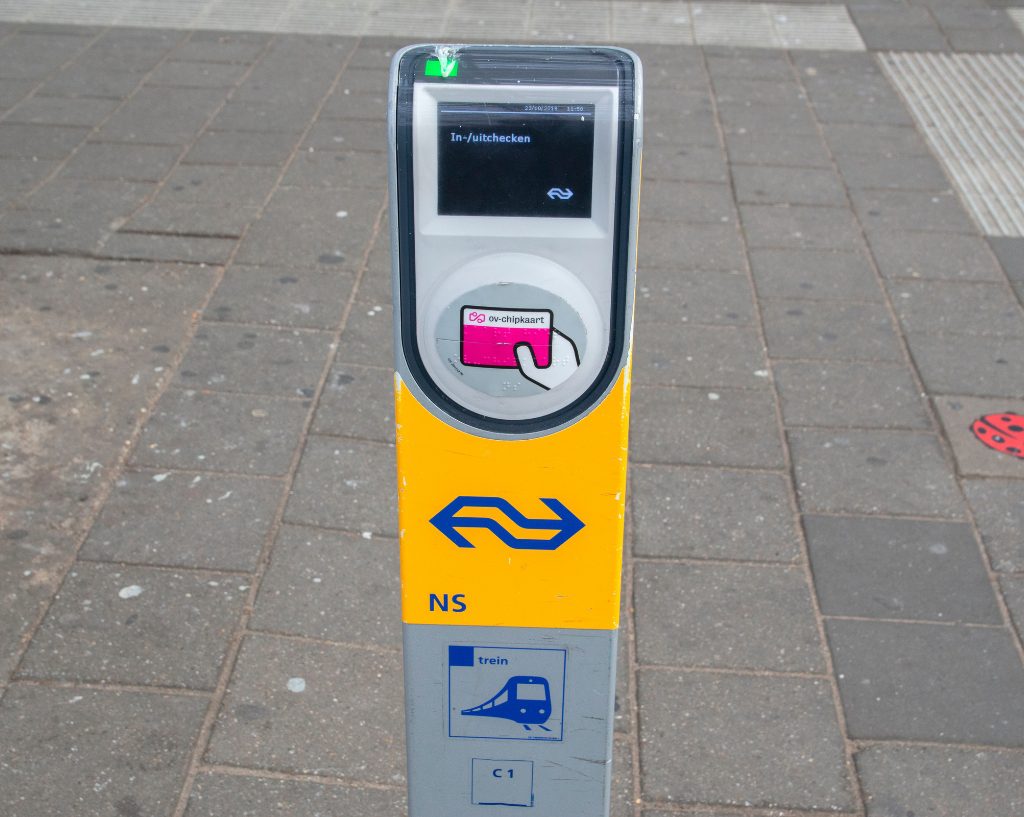
The OV-chipkaart system allows passengers to check in and check out of their chosen mode of transportation by holding the card close to a card reader. The fare for the journey is automatically deducted from the card’s balance. This system makes using public transportation easy and eliminates the need for separate tickets for each journey.
TYPES OF OV-CHIPKAART
TYPES OF OV-CHIPKAART
OV-CHIPKAART
There are 2 types of OV-chipkaart, anonymous and personal. The anonymous OV-chipkaart doesn’t have your personal details on it. It’s like a blank card that you can load money onto and use for public transport. It’s convenient if you don’t want to share your personal information or if you’re just visiting the country temporarily. You can buy this card at vending machines and use it right away by putting money on it.
Another option is getting your own personalized OV-chipkaart. It costs €7.50, and it’s valid for five years. If your card is expired, lost, or broken, you can replace it online and transfer your passes and travel stuff to the new card.
The Personal OV-chipkaart has your name and photo on it. It’s linked to you, and you can add travel subscriptions, discounts, and other benefits to it. This is a good choice if you’re planning to live in the Netherlands for a while and want to use public transport regularly. You usually need to order this card online, and it takes about 5 working days to receive it.
Here’s what you need:
- A photo in jpg format (under 5 MB)
- iDEAL or a Paypal account for payment.
RECHARGE YOUR OV-CHIPKAART
OV-CHIPKAART
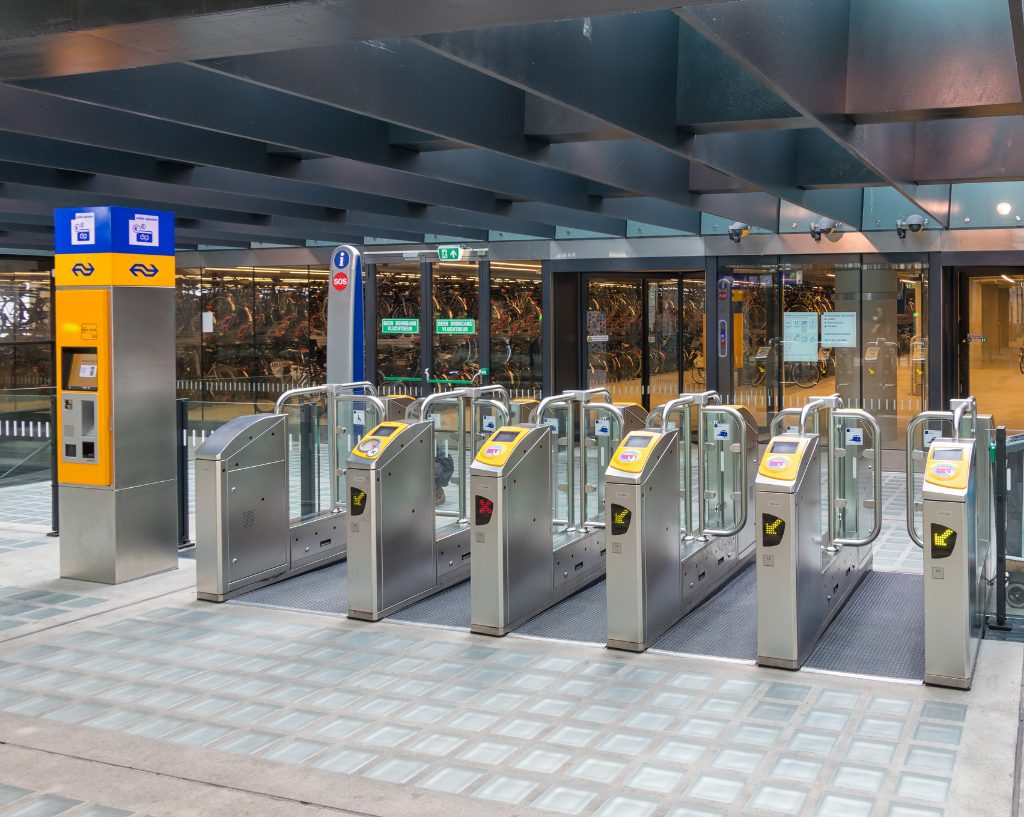
To add money to your OV-chipkaart, there are several options available. You can do it online by logging into the OV-chipkaart website and using your bank account or credit card.
Alternatively, most train stations, metro stations, and some tram and bus stops have ticket machines where you can follow the on-screen instructions to add money to your card.
If you prefer in-person assistance, many convenience stores, supermarkets, and tobacco shops have service desks that allow you to add money to your OV-chipkaart. At larger train stations, there are NS service desks (Nederlandse Spoorwegen, or Dutch railways) where you can also add money to to your card.
It’s important to note that you must maintain a minimum amount of credit on your card in order to check in and travel. Keeping an eye on your card’s balance will help you avoid any surprises during your journeys.
PLANNING YOUR JOURNEY
Before you start your trip using buses or trains, it’s a good idea to plan your journey. You can do this using websites or apps on your phone. For example, websites like 9292.nl and NS.nl give you live updates about when your transport will leave, how to switch between different ones, and where you need to wait.
These tools are super useful, especially if you’re new here and still getting used to where the buses and trains go and when they leave. So, before you head out, take a look at these websites to make your trip smoother!
CHECK-IN AND CHECK-OUT
When you use the OV-chipkaart, you have to do two things: check in and check out. This is important for paying the right fare. Here’s how:
- Check In: at the beginning of your trip, find the card readers. They’re at train stations, on trams, buses, and by ferry docks. Hold your card close to the reader. This tells the system you’re starting your journey.
- Check Out: when you’re done with your trip, do the same thing again. Look for the card reader and touch your card to it. This way, the system knows you’re done traveling.
DIDN’T CHECK OUT?
When you check in and out, you make sure that you are charged the correct amount for your ride. It can happen that you forget to check out and you might end up paying more than you should have. This is because the system assumes you traveled the maximum distance possible for the chosen mode of transport.
In case you realize that you didn’t check out, there is a refund process you can follow. You need to contact the customer service or fill in the online refund form here.
If you keep forgetting to check out, there could be more problems. Your card might stop working for a bit to make sure nobody else uses it wrongly.
So, always remember to check out when you finish your ride. It’s like the final step to make sure you don’t pay too much or have to deal with blocked cards or waiting for refunds. Just a simple move that can save you money and trouble.
BIKES & PUBLIC TRANSPORT
In the Netherlands, lots of people love riding bicycles, and as someone new to the country, you might discover that biking is a great friend to public transportation. At many train stations, they have special places just for parking bikes. This makes it easy for you to use your bike in combination with the train.
Biking is cool because it gives you flexibility. You can go where you want, when you want. Plus, it lets you check out the places around you in a nice, relaxed way. So, think about hopping on a bike – it could be a fun way to move around!
You can even take your bicycle on Dutch trains, but there are some rules and costs involved. Here’s what you need to know:
Cost: taking your bicycle on a train usually requires an additional ticket. This ticket is called a “fietskaart,” which means bicycle ticket. The cost varies depending on the distance you’re traveling. It’s a good idea to check the current prices on the official Dutch railways (NS) website.
Off-peak hours: bicycles are allowed on trains during off-peak hours on weekdays (before 6:30, between 9:00 – 16:00 and between 18:30 – 6:30. However, there might be some exceptions during holidays or special events.
Train types: not all trains allow bicycles. Intercity trains generally have space for bikes, but some regional trains might not. It’s a good idea to check the specific train’s details before you travel.
Foldable bikes: small, foldable bicycles can be taken on trains for free, as long as they’re folded and packed in a carrying bag.
Bike storage: when you bring your bike on the train, you need to store it in designated areas. Trains have special sections for bicycles, usually located near the doors.
Local rules: sometimes, local rules might apply, so always check with the specific train company or on the NS website for the most up-to-date information and guidelines.
CONCLUSION
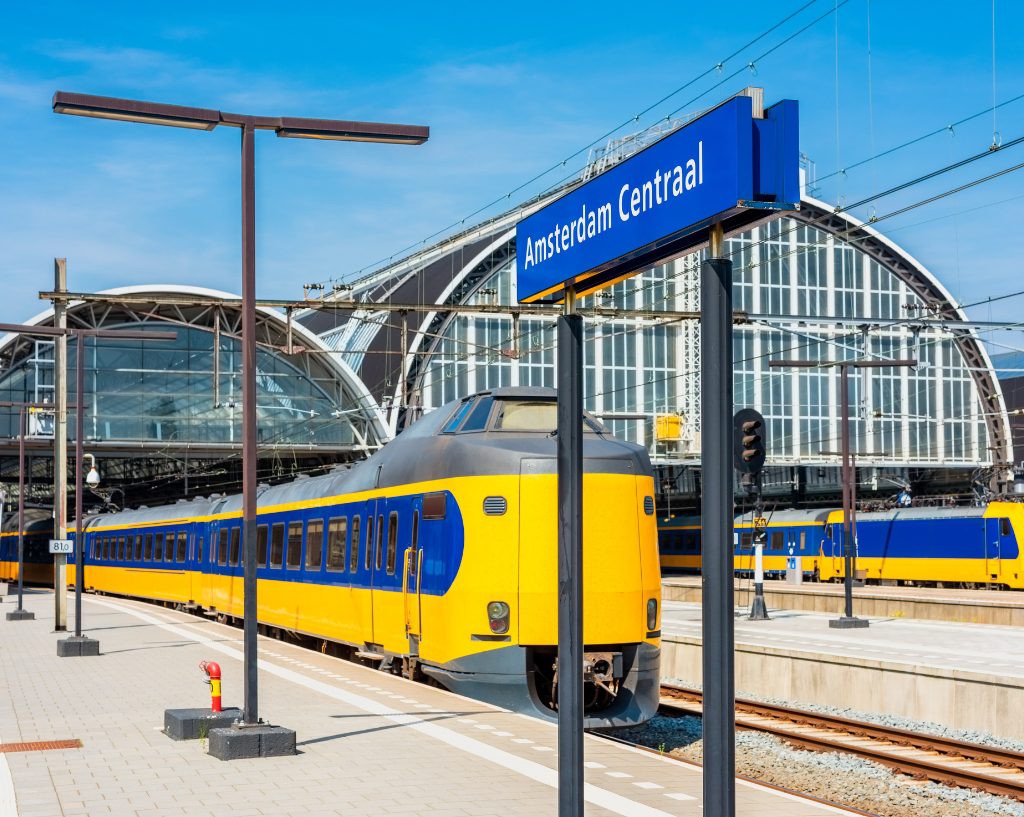
Using public transportation in the Netherlands isn’t just a way to get from one place to another – it’s also a chance to see how the locals live. Imagine enjoying a cup of coffee while riding on a train or looking out the tram window at the beautiful views passing by. Each trip you take becomes a part of your exciting expat journey.
Getting the hang of using public transport as an expat in the Netherlands is like getting a ticket to explore the country in a smart and real way. When you know how the OV-chipkaart works, plan your trips, and embrace all the different types of transportation, you’ll be moving around like a real Dutch person before you know it. So, get ready to jump on board – let the Dutch public transport system show you all the wonderful things this country has to offer!
Looking for a job in the Netherlands? Have a look at our available jobs and apply below.
TOP 5 ONLINE FREE CV MAKER TOOLS POWERED BY AI
There are a lot of free tools online that can help you build a professional CV. These tools use smart computer technology and do the work for you. You just need to fill in your details. However, before you start reading, there are few terms that you should be familiar with:
- AI, which stands for Artificial Intelligence, is when computers act like smart humans. They know a lot of things from the internet and use that knowledge to help you with stuff.
- ATS, which stands for Application Tracking System, is a tool that recruiters use to find people for jobs. It’s like a search engine, but for finding workers like welders, mechanics, and electricians. When you make changes to your CV, it helps you get noticed more by recruiters when they are searching for certain kinds of workers. It might sound complicated, but it’s actually quite easy to do. And it makes it much easier for you to find a really good job.

Jobscan is a free CV maker that makes your resume better for finding jobs. It changes the job hunting process by helping with technical stuff and making your CV work well for specific jobs. For example, it finds words that are missing and gives tips so recruiters can find your CV quickly.
Pros:
- Completely free to use, with no hidden fees or charges.
- Super easy to create your resume with a simple choice between 3 professional templates. Later on you can change the design.
3.The designs work well with the system recruiters use to find people for jobs (ATS). It means that there are higher chances that recruiters will find you while searching.
4. Provides additional resources such as cover letter templates and resume writing guides.
Cons:
- The technical part where you make your resume better is explained, but it needs some work from you.
- It does not save your resume or the documents that you you upload so you cannot change it at a later time.
- You have to write all the things about your jobs on your own.
- You can use special designs that work well with the job search system but you need to subscribe to a 14-day free trial.

This is our top pick because it is the most simple and free CV maker out there. You can choose how your resume would look like by picking one of their templates (a pre-made pattern). You can then edit it by adding your information.
Pros:
- Really simple and easy to use.
- It gives you ideas on what to write about so you don’t get confused.
- Dark theme that helps you work on your resume with minimum eye fatigue.
Cons:
- The website doesn’t provide much information.
- Design options are pretty basic but still good enough to make a decent resume. Also, you can’t upload your picture.
Enhancv is a free CV maker that uses smart technology to make resumes that show your strengths and individuality. It has different designs, a section for your skills that’s easy to use, and fun ways to make your resume look special.
Pros:
- It’s easy to use. You can add, move, and change different things on your resume such as colors and fonts. Also, it helps you fix spelling mistakes and gives suggestions for writing.
- There’s a tool for making cover letters. It gives you 12 templates to choose from and helps you make a letter that matches your CV.
- There are 14 different designs you can pick for your resume. Some are just plain text, while others look creative with pictures and icons.
- They have a special service to help you with your career. There are 3 paid plans you can choose from, with the most advanced one offering interview preparation.
Cons:
- You can save your resumes only as plain text (TXT) or PDF files. This is a big problem, especially if you want to edit your resume in a program like Microsoft Word.
- Some people who used Enhancv said they found problems. They couldn’t download their finished resumes because of a mistake in how it looked. Also, the tool’s spell checker and grammar checker didn’t work well.
- People don’t like the customer service either. They say that the people who are supposed to help aren’t very quick or helpful. It’s hard to talk to them and get the support you need.
Zety’s online free CV maker has become really popular, with over a million people using it. People like it a lot because it has great features and different designs to choose from. There are more than 15 designs that make your CV look special. Plus, lots of happy users on Trustpilot show it’s a good and reliable tool.
Pros:
- You can make a new CV or import from existing documents.
- You can use a resume guide that helps you with making your CV.
- It gives you designs for both CVs and cover letters that match.
- You can change how your CV looks to what you like.
- You can download your CV in different formats, like PDF and .docx.
Cons:
- You can’t upload photographs into your resume.

Rezi.ai is a new and advanced tool that helps you make a really good resume. It gives you lots of different styles and ways to make your resume look nice. It’s great for all kinds of jobs and experience levels because it has many options to choose from. This makes your resume unique and special.
Pros:
- Beginner-friendly. Easy to use for professionals of all levels.
- It has many smart tools that use AI, like a tool for making cover letters and another for creating lists with bullet points.
- The first CV you create is free of charge and you have full access to all the AI tools during its creation. It also doesn’t require any payment details (unlike some sites that claim they are “free”), which is a big plus.
4. AI keyword targeting is like a special trick for your CV. It’s a bit technical, but it’s useful. It helps you stand out to computer systems that recruiters use. This way, recruiters can find you more easily when they’re looking for people like you.
5. When you make your CV with AI’s help, it looks at it right away. Then, you get a review from a pro that tells you how good your CV is. They also give you tips on how to make it better.
Cons:
- The AI writer might not always get it right the first time. It could be better when you try again a second or third time, and the answers might match what you like more.
- You can make one CV for free. But if you want to make more, you have to pay for one of the options they offer.

CONCLUSION
In conclusion, while crafting an exceptional CV might be tough without design skills, AI technology and online tools have made it much easier. These tools don’t just improve how your CV looks; they also analyze industry trends and job requirements, helping you create a CV that matches what employers are seeking.
From our research, we discovered more helpful online tools, so we decided to create the list of five best ones. The great news is that all of them are free to use. This means you can confidently create a strong CV that stands out to potential employers. In case you would like to find more tips on creating a good resume, feel free to check out our recent blog on that topic here.
Looking for a job in the Netherlands? Have a look at our available jobs and apply below.
TRAFFIC FINES IN THE NETHERLANDS: AVOIDING TROUBLE ON DUTCH ROADS
The Netherlands is known for its well-organized infrastructure and the importance given to obeying traffic rules. However, during road trips, every driver can make small mistakes, which can lead to receiving a traffic fine. In this blog, we will focus on the types of fines you can receive in the Netherlands and how you can avoid these unpleasant situations. We will also explore the process of checking and paying fines online for a more convenient experience.
TYPES OF TRAFFIC FINES IN THE NETHERLANDS AND THE AMOUNTS INVOLVED
Exceeding the speed limit: One of the most common traffic fines is speeding. For minor violations (for example, exceeding by a few km/h), the fine can be around 50-100 euros. However, for more serious violations, such as exceeding by more than 30 km/h, the fine can reach 400-500 euros or even more. Also, exceeding the speed limit by a high value can attract additional penalties, such as a temporary suspension of the driver’s license.
The Traiect controle system (Trajectcontrole) is another mechanism used in the Netherlands to monitor and control speed in road safety sensitive areas. This system consists of a network of speed control cameras installed on highways or national roads. The cameras record the speed of vehicles over a longer distance, and not just at a single point, thus allowing the identification of drivers exceeding the speed limit along the entire route.
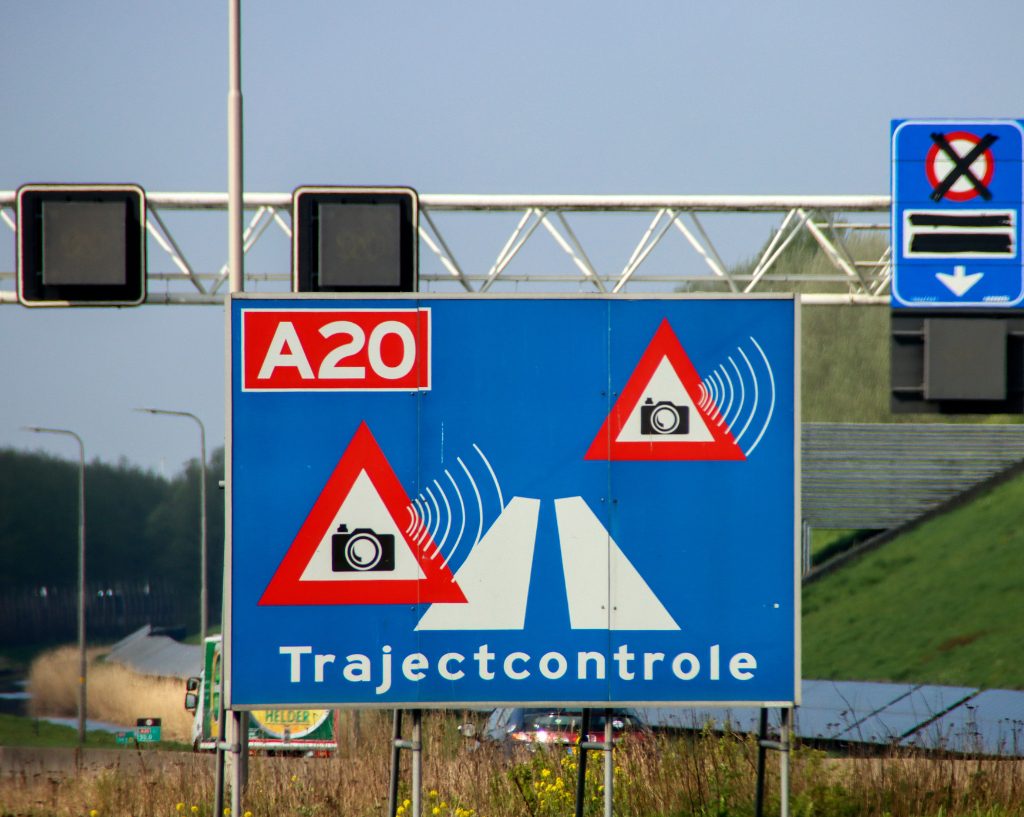
Illegal parking: In the Netherlands, parking rules are strict, and parking in prohibited places can be fined around 90-100 euros or more, depending on the severity of the violation. If your car blocks traffic or is stopped in residential areas where parking is prohibited, the penalties may be higher.
Crossing the red traffic light: Ignoring the traffic light and driving on red is a serious and dangerous violation. Fines for this type of offense can be around €200 or more, and in some cases, the driver may also be subject to other legal sanctions.
Using a mobile phone while driving: Talking on the phone without hands-free or texting while driving is prohibited in the Netherlands. Fines for this violation can be around 230 euros or more.
Dutch authorities have implemented specialized monitoring cameras that can detect drivers using their mobile phone while driving. These cameras are designed to identify mobile phone use through object recognition algorithms and driver behavior.
Violation of the rules for cyclists: In the Netherlands, cyclists have their own rules and must be given priority in certain situations. These situations include intersections with special markings for cyclists, separated cycle lanes and dedicated routes, pedestrian crossings with cycle lanes and the entrance to roundabouts. Violation of these rules can attract fines of around 55-100 euros, depending on the severity of the violation.
HOW TO AVOID TRAFFIC FINES IN THE NETHERLANDS
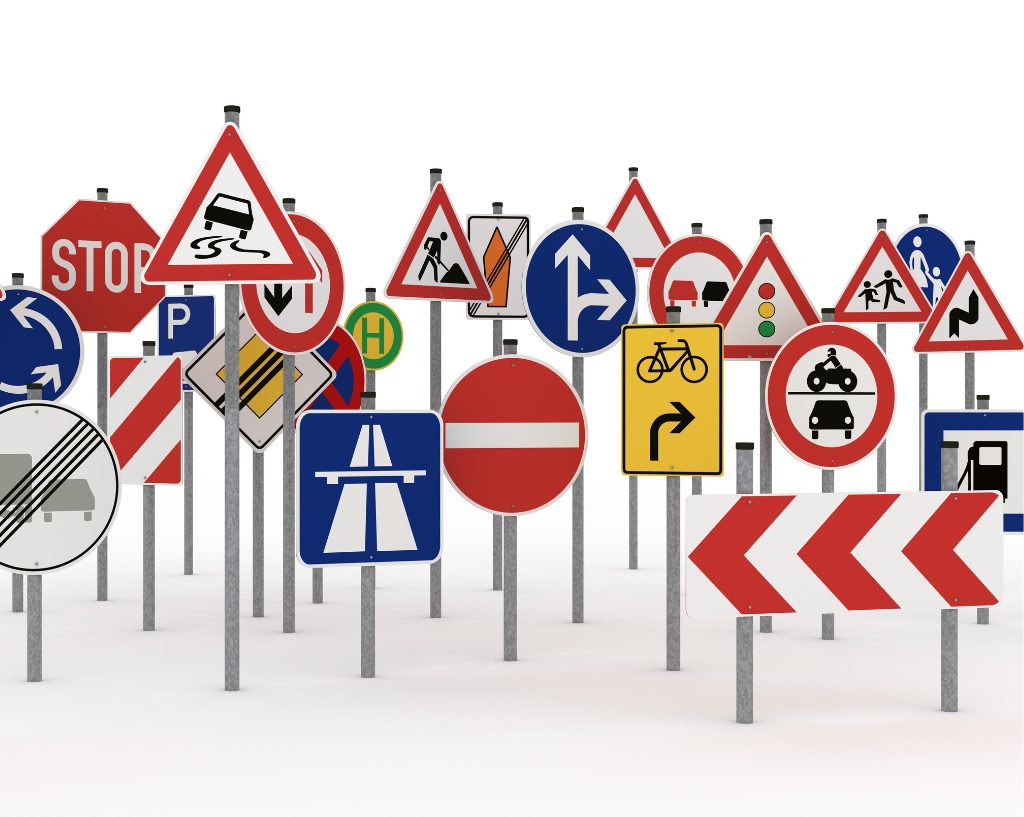
To avoid traffic fines in the Netherlands, it is important to follow the traffic rules and pay attention to road signs. Here are some tips to stay safe and avoid possible penalties:
- Obey speed limits and adapt your speed to traffic and weather conditions. Download the app Flitsmeister for real-time information on speed limits, traffic, fixed and mobile speed cameras and police speed checks.
- Make sure you park your car in permitted areas and respect road markings for correct parking.
- Stop at red lights and always give priority to cyclists and pedestrians.
- Only use the cell phone hands-free or stop the car in a safe place if you must talk on the phone.
- Inform yourself in advance about the traffic rules specific to the Netherlands and follow them strictly.
HOW TO CHECK TRAFFIC FINES ONLINE IN THE NETHERLANDS
If you made a mistake and ended up with a traffic fine in the Netherlands, it is important to check regularly whether you have received any fines. The verification procedure is simple and can be done online.
- Go to the official website of the Dutch Traffic Police (Politie.nl) or the National Road Traffic Authority (RDW.nl).
- Look for the section dedicated to checking traffic fines or directly enter “Check traffic fines Netherlands” in the search bar.
- Fill in the required data, such as the vehicle registration number and fine file number.
If there is any fine associated with your vehicle, it will be displayed on the screen.
HOW TO PAY TRAFFIC FINES IN THE NETHERLANDS THROUGH CJIB
If you have received a traffic fine in the Netherlands, the payment process is simplified and convenient, thanks to the platform of the National Center for Road Sanctions (Centraal Justitieel Incassobureau – CJIB). The CJIB is the body responsible for managing and collecting traffic fines in the Netherlands. To pay the fine, follow these steps:
- Go to the CJIB website: To start the payment process, access the official CJIB website here.
- Search for payment option: On the main page of the site, you will find a section dedicated to payments. This may be called “Pay online” or “Pay a fine”.
- Identify the required information: Before proceeding, make sure you have the information you need to make the payment. You will need the vehicle registration number and the ticket number.
- Authenticate with DigID: To access the online payment service, you will be asked to authenticate with DigID. DigID is an electronic authentication system used in the Netherlands to protect personal data and ensure that only authorized people have access to online government services.
- Complete the payment details: After login, you will be redirected to the payment form. Enter the requested information, such as the vehicle registration number and ticket number.
- Choose the payment method: Choose your preferred payment method and make sure you have enough funds to make the payment. You will receive a confirmation that the payment was made successfully.


CONCLUSION
In conclusion, in the Netherlands, following traffic rules is essential to avoid traffic fines and contribute to road safety. Among the most common fines are speeding, illegal parking, driving through a red light, using a mobile phone while driving and not following the rules for cyclists.
To check and pay fines, drivers can use the CJIB platform, which provides a simple and convenient way to make payments online. When traveling on the road, it is important to be responsible and obey the traffic laws in order to enjoy a safe and hassle-free experience in Dutch traffic.
Looking for a job in the Netherlands? Have a look at our available jobs and apply below.
HOW TO NEGOTIATE A PAY RISE?
Negotiating a salary raise can be a daunting task, but with the right approach and preparation, it is possible to achieve the compensation you deserve. In this blog post, we will explore key strategies and techniques to help you navigate the salary negotiation process successfully. From cultivating patience to identifying your value and honing your negotiation skills, we will provide you with actionable steps to make your case and secure the pay raise you desire.
1. CULTIVATE PATIENCE
Patience is a virtue when it comes to negotiating. Especially in the beginning stages, it is important to exercise self-control and avoid rushing into the process. Take the time to build a strong foundation of performance and establish yourself as a valuable asset to the company.
Demonstrate your dedication, work ethic, and willingness to go above and beyond. By consistently delivering high-quality work and exceeding expectations, you lay the groundwork for a successful negotiation in the future.


2. KNOW WHAT TO FOCUS ON
While being a good worker is always essential, there are specific areas that can help you stand out and earn extra recognition when it comes to negotiating a pay raise. Proactivity and a willingness to help are key attributes that employers value highly, especially in the Netherlands.
Take the initiative to identify and address areas where you can contribute beyond your job description. Offer your assistance on challenging projects, propose innovative ideas, and demonstrate your commitment to the success of the company. By going the extra mile and showcasing your value, you create a strong case for a salary increase.
3. ASK FOR FEEDBACK
Before initiating the negotiation process, it is crucial to seek feedback from your superiors. Inquire about areas where you can improve and ask for guidance on the company’s priorities.
Understanding your strengths and weaknesses will help you tailor your approach and arguments effectively during the negotiation. Additionally, by showing a willingness to grow and develop, you demonstrate your commitment to personal and professional improvement, making a compelling case for a pay raise.

4. PRACTICE THE ART OF NEGOTIATION
Negotiation is a skill that can be learned and refined. To improve your chances of success, it is essential to practice and prepare for the negotiation conversation. Start by researching industry standards and salary ranges for similar positions. This information will give you a benchmark and help you determine a reasonable salary expectation.
Next, prepare a list of compelling arguments that highlight your accomplishments, contributions, and the value you bring to the organization. Present concrete examples of how your work has positively impacted the company, such as cost savings, revenue generation, or process improvements. By backing up your request with tangible evidence, you strengthen your negotiating position and increase your chances of securing a salary raise.
There is a lot of material on the internet on negotiation and it is not possible to put all the knowledge in one blog post. We have carefully selected and compiled relevant resources for you. These additional materials provide further guidance and insights on effectively negotiating a higher salary. Here are more tips and ideas that can help you negotiate a higher salary by learning how to ask properly for a raise and 8 methods behind making a successful negotiation.

CONCLUSION
Negotiating a pay raise requires patience, preparation, and effective communication. By cultivating a reputation as a valuable asset, focusing on areas that set you apart, seeking feedback, and honing your negotiation skills, you can confidently approach the negotiation table and make a compelling case for a raise.
Remember, the key is to present a strong argument supported by concrete evidence of your contributions. With persistence and the right approach, you can increase your chances of securing the salary you deserve. So, go ahead and take charge of your professional growth by mastering the art of salary negotiation.
Looking for a job in the Netherlands? Have a look at our available jobs and apply below.